

Find local dry ice suppliers
Dry ice is not a standard grocery item, so locating a supplier requires knowing where to look. Most consumers will find their best options at large retail chains or specialized industrial gas providers. The availability depends on whether you need a small block for a party or bulk quantities for commercial use.
Retail grocery stores
Major grocery chains like Safeway, Kroger, and Walmart are the most accessible sources for dry ice. These stores typically stock Penguin Brand Dry Ice, which is distributed to more than 5,000 retail locations nationwide. You can usually find it in a dedicated cooler near the checkout lanes or in the frozen food aisle.
While convenient, grocery stores often limit purchases to one or two blocks per customer. Inventory can also be inconsistent, especially on weekends or holidays. If you need a large quantity, call ahead to confirm stock levels before driving to the store.
Specialized ice suppliers
For larger orders or specific shapes, specialized suppliers are the better choice. Companies like Cee Kay Supply offer dry ice by the pound, often with online ordering and shipping options. These suppliers provide bulk discounts and can deliver directly to your door, though you must provide an insulated cooler for transport.
Industrial gas companies are another reliable source. They supply dry ice for scientific, medical, and industrial applications. These suppliers often have the most consistent inventory and can accommodate custom requests, such as pellets or crushed ice, which are harder to find at retail locations.

Buying dry ice online
Purchasing dry ice online is possible but comes with logistical challenges. Because dry ice sublimates (turns directly into gas), it has a limited shelf life. Shipping costs are high due to hazmat fees, and you must ensure the package arrives quickly to prevent loss.
If you choose to buy online, look for suppliers that offer express shipping and provide insulated packaging. Always check the estimated delivery time and have your cooler ready upon arrival. For most local buyers, visiting a physical store is faster and more cost-effective.


As an Amazon Associate, we may earn from qualifying purchases.
Choose block or pellet form
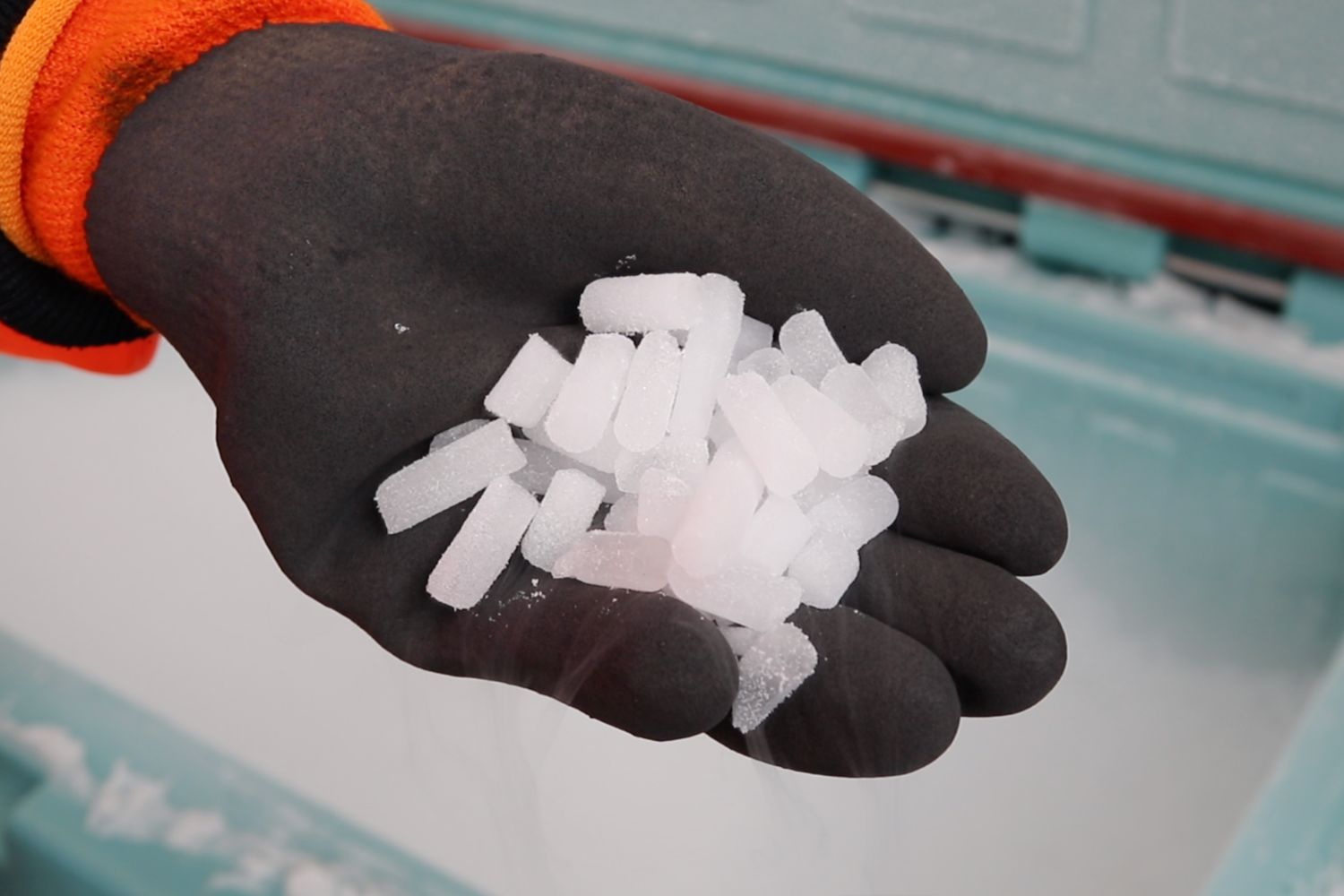
Dry ice comes in two main shapes, and the right choice depends on how long you need it to last and how you plan to use it. Blocks are dense and compact, while pellets are small, uniform cylinders. This difference affects sublimation rates, handling ease, and price.
Block vs. Pellet Comparison
| Feature | Block Dry Ice | Pellet Dry Ice |
|---|---|---|
| Sublimation Rate | Slow (lasts longer) | Fast (melts quicker) |
| Surface Area | Low (less exposure) | High (more exposure) |
| Best Use Case | Long transport, bulk cooling | Blasting, cleaning, small gaps |
| Handling | Heavy, single unit | Easy to scoop, pour |
Blocks are ideal if you need to transport ice over long distances or keep items frozen for several days. Their low surface area-to-volume ratio means they sublimate slowly. Pellets, on the other hand, are better for dry ice blasting or cleaning intricate surfaces because they can be easily directed into crevices. However, they melt faster due to their higher surface area.

Safety and Handling Checklist
Regardless of the form you choose, dry ice requires careful handling. Always wear insulated gloves and work in a well-ventilated area to avoid carbon dioxide buildup. Store it in an insulated container, but never seal it airtight, as pressure can build up and cause an explosion. For pellet blasting, use a specialized nozzle to direct the stream safely.
-
Wear insulated gloves and safety glasses
-
Use a well-ventilated workspace
-
Store in an insulated cooler (not airtight)
-
Handle with tongs or gloves, never bare hands
-
Dispose of remaining ice in a well-ventilated area
Handle and store dry ice safely
Where to Buy Dry Ice works best as a sequence, not a pile of settings. Do the minimum first: confirm compatibility, connect the primary device, update only when needed, and test the result before adding optional features. That order keeps the task understandable and makes failures easier to isolate. After each step, pause long enough for the device or app to finish syncing. Many setup problems are timing problems disguised as configuration problems. If the same step fails twice, record the exact error, restart the smallest affected piece, and retry before moving deeper.


Avoid common dry ice mistakes
Buying dry ice is straightforward, but handling it incorrectly can lead to safety hazards or wasted product. Beginners often treat dry ice like regular ice, leading to dangerous pressure buildup or carbon monoxide exposure. Understanding these pitfalls ensures your purchase is safe and effective.

Transport dry ice in an insulated cooler with the lid slightly propped open. This allows gas to escape while maintaining temperature. Never use a sealed plastic bin or metal bucket, as pressure will build up quickly.
Always use thick gloves or tongs when handling dry ice. Direct skin contact can cause frostbite within seconds. Keep children and pets away from the handling area.

If you must store dry ice temporarily, place it in a well-ventilated space like a garage or basement. Never leave it in a living room, bedroom, or car with windows up.
Another common mistake is buying dry ice too far in advance. Dry ice sublimates at a rate of 10–20% per day, depending on insulation and ambient temperature. Plan to pick it up no more than 24 hours before you need it. If you need it for a party, buy it the morning of the event.
Finally, avoid using regular trash bags for transport. Dry ice is extremely cold and can freeze through thin plastic, causing tears and spills. Use a sturdy cardboard box or a dedicated styrofoam cooler for carrying dry ice from the store to your vehicle.
Try safe dry ice experiments
Where to Buy Dry Ice works best as a sequence, not a pile of settings. Do the minimum first: confirm compatibility, connect the primary device, update only when needed, and test the result before adding optional features. That order keeps the task understandable and makes failures easier to isolate. After each step, pause long enough for the device or app to finish syncing. Many setup problems are timing problems disguised as configuration problems. If the same step fails twice, record the exact error, restart the smallest affected piece, and retry before moving deeper.
The simplest way to use this section is to keep the setup small, verify each change, and document the working configuration before adding extra devices.
No comments yet. Be the first to share your thoughts!