

5 Best Sources and Safety Guide
Locate reliable dry ice suppliers through these five verified sources, ranging from local grocery stores to specialized industrial vendors. Each option includes specific purchasing instructions and critical safety protocols to ensure safe handling and transport.
1. Supermarket and Grocery Store Counters
Many large supermarkets stock dry ice at their customer service or meat counters, making it a convenient option for last-minute needs. While availability varies by location and season, this method offers immediate pickup without shipping delays. Always call ahead to confirm stock levels and specific packaging requirements before visiting the store to ensure a smooth transaction.
2. Local Ice and Fuel Retailers
Independent ice dealers and some fuel stations often carry dry ice, particularly in rural areas or during peak summer months. These specialized retailers usually maintain consistent supply chains distinct from grocery stores. Checking local directories or calling ahead ensures you find a nearby source that can accommodate your specific quantity needs and pickup timing.
3. Commercial Dry Ice Suppliers
Industrial suppliers provide bulk dry ice for commercial applications, such as food processing or shipping. They offer various pellet sizes and specialized packaging solutions for extended preservation. This option is ideal for businesses requiring large volumes, ensuring reliable supply and professional handling standards that meet strict industry regulations and safety protocols.


4. Online Dry Ice Delivery Services
Specialized online vendors deliver dry ice directly to your doorstep, often using insulated containers to maintain temperature during transit. This service is perfect for remote locations or when local sources are unavailable. Verify delivery windows and handling instructions carefully, as dry ice sublimates quickly and requires prompt receipt to ensure product integrity upon arrival.

5. University and Research Facilities
Some universities and research labs sell excess dry ice to the public or through affiliated suppliers. These sources often provide high-purity dry ice suitable for scientific experiments or educational demonstrations. Contact the facility’s procurement or safety department to inquire about availability, purchase procedures, and any specific safety guidelines required for handling and transport.

Where to buy dry ice near you
Finding a reliable source for dry ice is often the first hurdle for anyone looking to preserve food, create special effects, or run a science experiment. While it is not stocked in every supermarket, major grocery chains and specialty suppliers maintain consistent inventory because of its steady demand for shipping, medical transport, and household uses.
Your most accessible option is likely a large grocery store. Chains like Safeway, Kroger, and Publix typically stock dry ice at the frozen food section, often near ice cream or frozen vegetables. Prices generally range from $1.50 to $3.00 per pound. Because inventory levels fluctuate daily based on supply chain constraints, calling the specific store ahead of time is essential to ensure they have stock available for pickup.
For larger quantities or more consistent availability, specialty dry ice suppliers are the next best source. Companies like Penguin Dry Ice operate numerous distribution centers across the country. These suppliers often serve commercial clients but also sell to the public. They frequently offer locator tools on their websites to help you find the nearest pickup point, and they may provide bulk discounts if you need more than the typical 10-20 pound limit found at grocery stores.
Ice shops and some gas stations with frozen food sections can also be viable options, though they are less common. If you cannot find a local retailer, online retailers offer shipping services, though this is usually reserved for urgent needs due to the short shelf life of dry ice. Always verify that the supplier uses proper insulation during transit to prevent sublimation before it reaches your doorstep.
Order dry ice for delivery
Buying dry ice online is the most reliable way to secure a specific quantity, especially if your local suppliers are sold out or have limited stock. Many industrial gas companies and specialized online retailers now ship dry ice directly to your door, turning a logistical headache into a scheduled delivery.
The process is straightforward but requires planning. You will select the weight you need—typically ranging from 5 to 50 pounds—and choose a shipping speed that ensures the ice survives the journey. Because dry ice sublimates at a rate of 10 to 20 pounds per day, standard ground shipping is often insufficient for long distances. You must opt for expedited shipping (usually 1-2 days) to ensure the product arrives solid.
Packaging is handled by the seller, but you should still prepare for the arrival. Dry ice is shipped in insulated Styrofoam coolers or thick cardboard boxes with ventilation holes. These containers are designed to keep the ice frozen for several days, but they are not airtight. Once it arrives, transfer the dry ice to your own insulated cooler immediately. Do not seal it in an airtight container, as the expanding gas can cause a buildup of pressure.

As an Amazon Associate, we may earn from qualifying purchases.
If you cannot find a local source or need a large quantity for an event, online retailers offer a convenient alternative. However, always check the retailer’s specific shipping policies and coverage areas before ordering, as some regions may have restrictions on dry ice shipments due to airline regulations.
Buy dry ice from industrial suppliers
When you need more than a few pounds for a single event, industrial suppliers offer a different buying experience than retail stores. These specialized vendors cater to businesses, laboratories, and large-scale projects, providing bulk quantities that are simply unavailable at grocery stores or gas stations.
Industrial suppliers typically stock both block and pellet dry ice. Pellets, often 3/8-inch in diameter, are easier to store and use for rapid cooling applications, while blocks are better for longer-lasting cold retention. Suppliers like Cold Freight Services can provide quantities ranging from a single pound up to massive industrial loads, making them ideal for food processing, medical transport, or large-scale fog effects.
Purchasing from these sources often requires advance notice due to the specialized manufacturing process. Unlike retail counters that may have dry ice on hand, industrial suppliers usually produce it on demand or on a strict schedule. You will likely need to arrange for pickup or specialized shipping, as standard delivery trucks cannot transport dry ice due to carbon dioxide buildup risks.
Safety remains the primary concern when handling large volumes. Industrial suppliers often provide detailed handling guidelines, but it is your responsibility to ensure proper ventilation and use insulated containers. Always verify the supplier’s safety certifications and ensure they can meet your specific volume requirements without compromising quality or safety protocols.
Store dry ice safely at home
Dry ice sublimes—turning directly from solid to gas—at a rate of 5 to 10 pounds per day, depending on insulation and ambient temperature. Storing it properly minimizes this loss and prevents dangerous pressure buildup in enclosed spaces. Treat your storage container like a temporary refrigerator: it needs to keep the cold in while allowing the gas to escape.
Use a standard Styrofoam or high-density polyethylene cooler. Avoid vacuum-flask style coolers or airtight containers. Standard coolers are designed to retain cold, which slows sublimation, but they are not hermetically sealed, allowing gas to vent safely. A cooler that is slightly larger than the dry ice block provides better insulation air gaps.
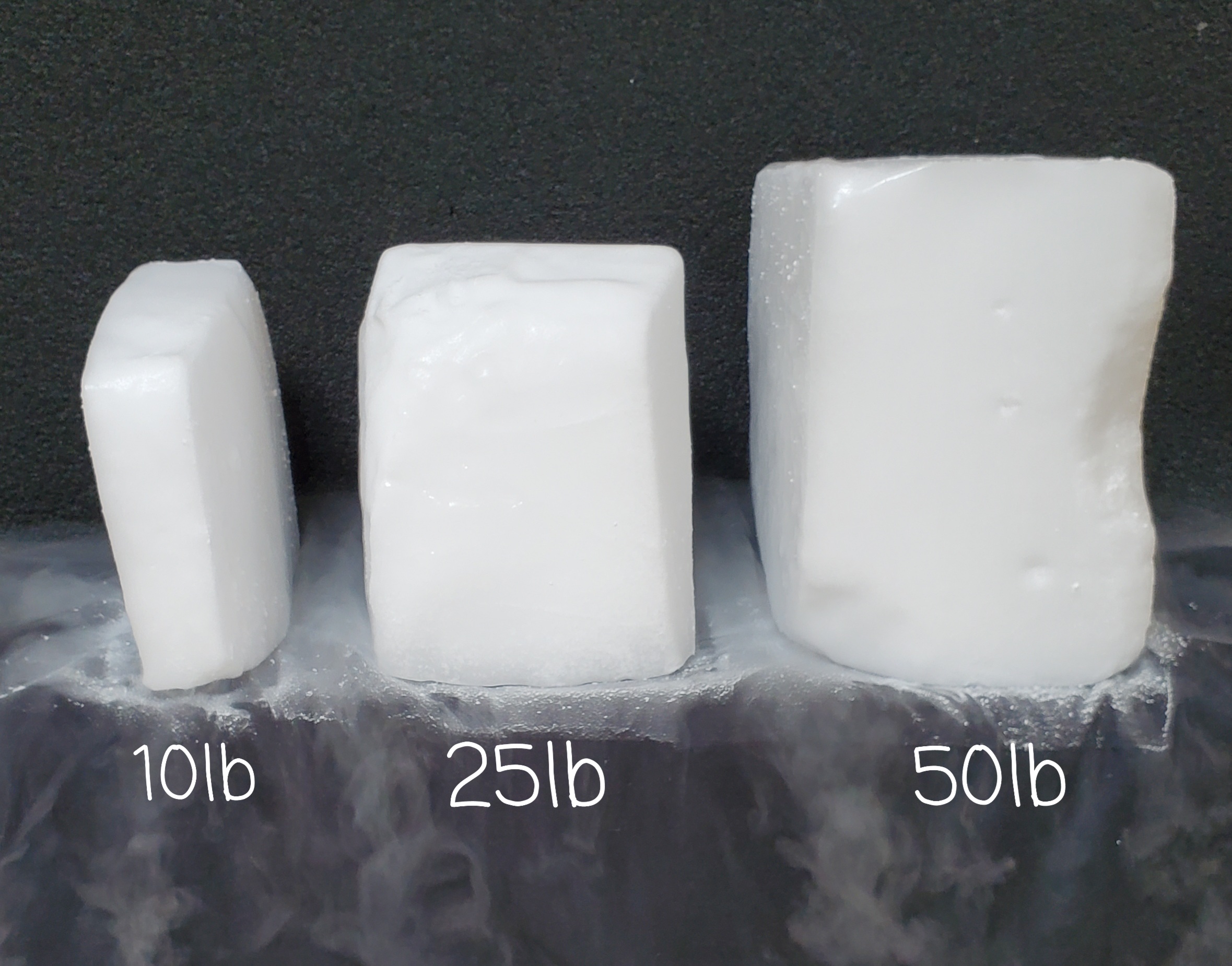
Wrap individual blocks or pellets in layers of newspaper or bubble wrap. This creates a thermal barrier that slows sublimation without trapping gas against the plastic. Do not use airtight plastic bags or shrink wrap, as the expanding gas can cause them to burst. The wrapping should be loose enough to allow air circulation but dense enough to reduce heat transfer.
Put the wrapped dry ice into the cooler. Do not pack it tightly. Leave some air space around the blocks; air is a good insulator. If you are storing pellets, fill the cooler about halfway. Overfilling reduces the insulating air gap and can cause the dry ice to sublimate faster due to increased surface area exposure to warmer air.
Close the lid but do not latch it completely. Tape the lid down lightly or wedge it open slightly with a stick or another object. This is critical: as dry ice sublimates, it expands into carbon dioxide gas. If trapped in a sealed container, this pressure can rupture the cooler or launch the lid with significant force. Always store dry ice in a well-ventilated area, never in a car or small room.
Use your dry ice within 24 to 48 hours for best results. Check the cooler periodically. If you notice excessive fog escaping from the vents, it is sublimating rapidly. For transport, keep the cooler upright and avoid direct sunlight. Once the dry ice has fully sublimated, allow the remaining gas to vent in a safe, open area before disposing of the empty cooler.
Safety Note: Never touch dry ice with bare skin. It is -109.3°F (-78.5°C) and causes instant frostbite. Always use tongs or thick gloves when handling.
By following these steps, you extend the life of your dry ice and ensure a safe storage environment. Remember, the goal is to balance insulation with ventilation—keep the cold in, but let the gas out.
Dry ice safety precautions
Dry ice is -109.3°F (-78.5°C). Handling it without protection causes frostbite in seconds. Treat it like an open flame: respect the cold, but don't panic. The primary risks are skin burns and asphyxiation from carbon dioxide buildup.
Always wear thick, insulated gloves or use tongs when touching dry ice. Never use bare hands. If you don't have specialized gloves, heavy winter work gloves offer minimal protection for very brief contact, but tongs are safer for moving blocks. Keep your hands dry; moisture on skin freezes instantly upon contact with dry ice.
Carbon dioxide is heavier than air. It sinks and pools in low areas. Never store dry ice in a sealed container or a small, unventilated space like the trunk of a car for extended periods. Always transport it in a well-ventilated vehicle with windows slightly open. In a closed garage, even a few pounds can displace oxygen, leading to dizziness or unconsciousness.
Use a well-ventilated area for any experiment or display. If you feel dizzy, lightheaded, or have a headache, move to fresh air immediately. These are early signs of CO2 accumulation. Don't ignore them.
No comments yet. Be the first to share your thoughts!